

When Yamaha Learned the Arabic Maqam: The PSR-62 and the Birth of the Oriental Keyboard
When we hear the name Yamaha today, we immediately think of pianos, organs, keyboards and synthesizers. What makes the story interesting is that Yamaha itself began with an organ.
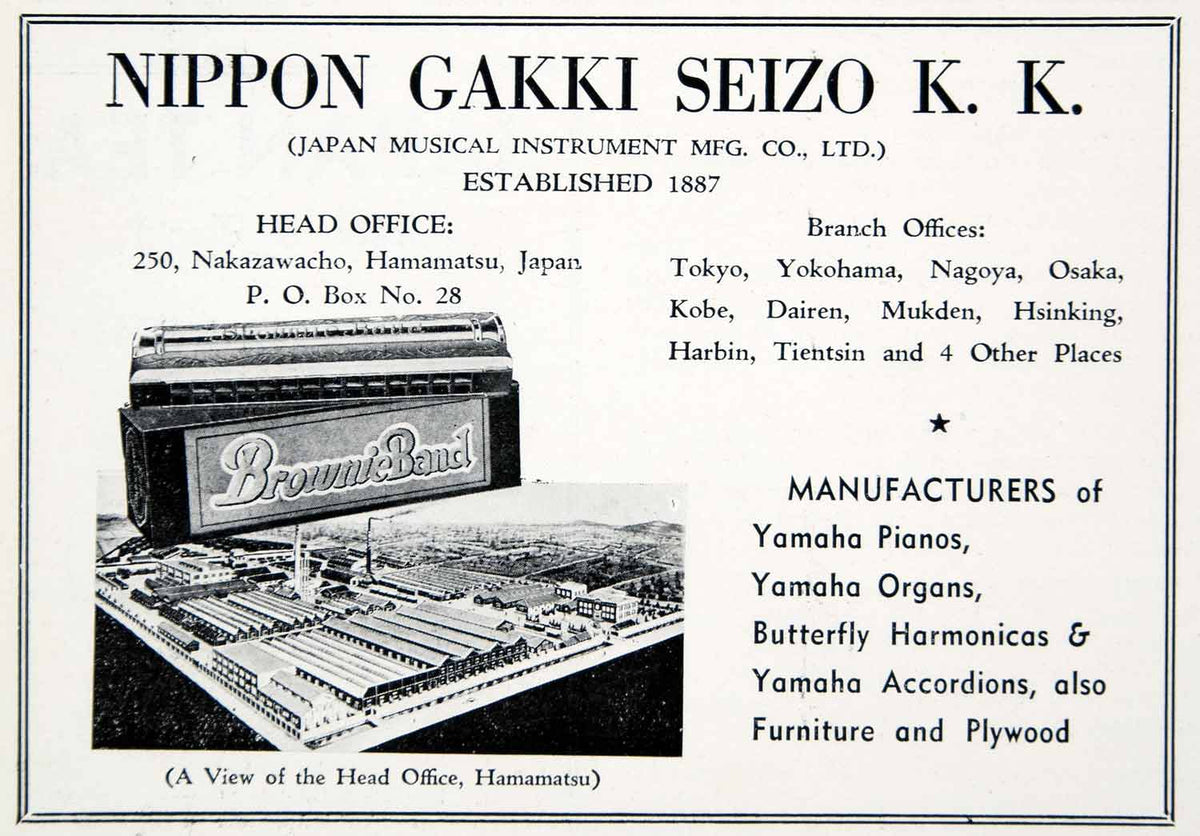
In 1887, Torakusu Yamaha repaired a broken reed organ at a Japanese elementary school. He studied how it worked and then built an organ himself. From that beginning came Nippon Gakki, the company that would later become Yamaha Corporation.
Yamaha later moved into electronic instruments, and in 1959 introduced its first electronic organ, the Electone D-1. At a time when vacuum tubes were still central to many electronic devices, the move toward transistors helped make electronic instruments smaller and more practical.
As technology developed through the 1970s and 1980s, keyboards became lighter and easier to carry, while competition between Yamaha, Casio and other Japanese manufacturers intensified. Every company wanted more sounds, better rhythms and automatic accompaniment that could make one player sound closer to a full band.
Arabic Music Needed More Than the Piano’s Twelve Notes
In the Middle East, however, there was a different problem. A conventional piano divides the octave into twelve fixed semitones, while Arabic maqamat such as Bayati, Rast, Sikah and Saba can require pitch degrees that are not directly available in standard 12-tone equal temperament.
An oud or violin player can reach these pitches more freely. A keyboard is constrained by its keys. That led to an important idea: instead of forcing the Arab musician to adapt to the keyboard, why not adapt the keyboard to Arabic music?
1986: Yamaha PSR-62
In 1986, Yamaha released the PSR-62. Yamaha describes it as its first World Music keyboard, and it was clearly designed to suit the musical needs of the Middle East.
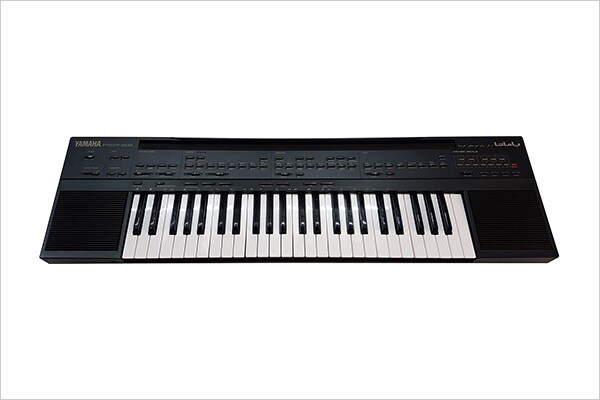
This was not simply a normal keyboard with a few Middle Eastern sounds added. It included dedicated Scale Tuning controls that allowed the player to lower selected notes across the keyboard for the pitch degrees required by a maqam. Yamaha also included fine tuning and the ability to store multiple scale settings and switch between them while performing.
Today that may sound ordinary, but this was 1986. Yamaha was beginning to take the needs of musicians in the region seriously not only in terms of instrument sounds, but in the actual way the music was played.
The Kanoun Sound That Stayed in Memory
The PSR-62 was memorable for more than scale tuning. It had several sounds that stayed with people who grew up with the instrument, particularly Kanoun, along with saxophone, strings, accordion, brass and oboe.
These sounds cannot compete in realism with today’s enormous sample libraries, but they had a very strong character. Sometimes you hear a sound from an old keyboard and recognize it immediately, even before you see the instrument.
And the Rhythms Were Half the Fun
Anyone who lived with keyboards from that period knows that the story was never only about the sounds. According to DemoDB, the PSR-62 included 16 rhythms, four of them Oriental rhythms, together with functions such as variations, fills, intros, endings and handclaps.
You started the rhythm, chose a sound and played. For musicians in our region, having the right rhythm mattered almost as much as having access to the right maqam. The keyboard was no longer only capable of producing the right pitch; it was beginning to speak the musical language the player already knew.
I Owned a PSR-62
This is where the story becomes personal for me. I owned a Yamaha PSR-62.
At the time, I had no idea that the instrument had any historical importance. To me it was simply the keyboard I played: trying the Kanoun, saxophone and strings, and moving between rhythms and sounds.
What is strange is that I only understood its significance many years later. I did not know that the keyboard in front of me represented one of Yamaha’s earliest serious steps toward building a line specifically for Middle Eastern music.
That may be one of the nicest things about old instruments. Sometimes we remember a machine simply because we loved its sound, then years later discover that we had been using a small piece of electronic-music history.
After the PSR-62
The success of the idea encouraged Yamaha to develop it further. In 1990 came the PSR-64, which Yamaha describes as its second-generation Middle East model. It added six percussion pads, and with the Variation controls the player could access a wider range of percussion sounds, including tabla and frame-drum sounds.

Later, models carrying the A designation appeared, including the PSR-A3, followed by the PSR-A1000, PSR-A2000 and PSR-A3000, leading eventually to the PSR-A5000. With every generation, these instruments became more specialized: better Arabic and Oriental voices, more Khaleeji, Levantine, Egyptian, Maghrebi, Turkish and Persian styles, and greater control over scales and live performance.

Why Does the PSR-62 Still Matter?
Not because it was the most powerful keyboard Yamaha ever made, and certainly not because its sounds are better than what we have today. Its importance lies somewhere else: it represents the beginning of Yamaha’s dedicated Middle East keyboard line.
Before that, the musician had to adapt to the keyboard. With instruments like these, the instrument itself began to change so that it could adapt to our music.
There is a fitting symmetry to the story. Yamaha began in 1887 with a man repairing an organ in a Japanese school. Almost a century later, its engineers were facing a completely different question: how do we make a Japanese keyboard play an Arabic maqam?
The PSR-62 was one of Yamaha’s most important early answers to that question.
For me, there is one more reason the story matters: one of the instruments that formed part of my own beginning in music was also part of Yamaha’s beginning with the Oriental keyboard.